Allies terrified as Hegseth pushes Trump to unleash legally dubious bombing escalation
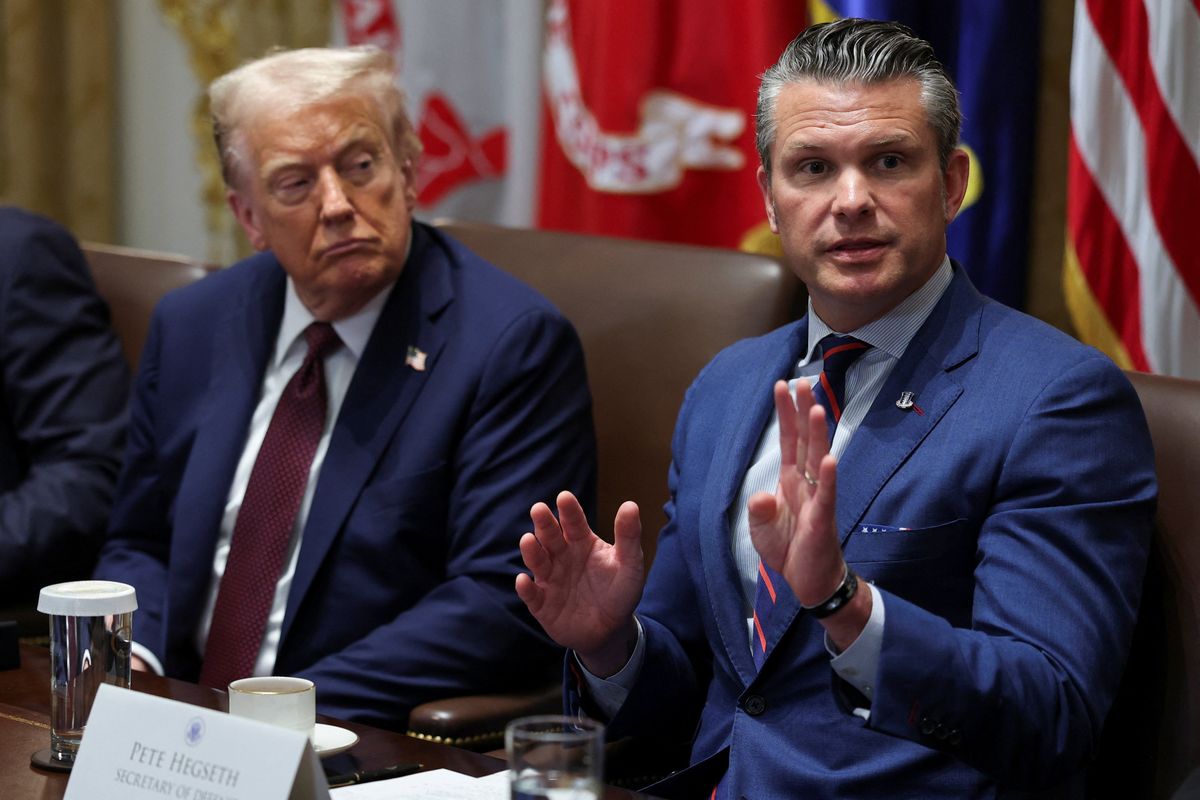
President Donald Trump's closest allies in the Middle East are privately sounding the alarm as Defense Secretary Pete Hegseth pushes the president to escalate the Iran war by targeting civilian infrastructure — including power plants and desalination facilities that millions of people depend on to survive, the Wall Street Journal reported Saturday.
Hegseth has personally briefed Trump on a legal rationale for striking Iran's bridges and roads, arguing that Iran's military could theoretically use them to move missiles and drone materials, the Journal reported. A White House official added that destroying power plants could "foment civil unrest," potentially complicating Tehran's path to a nuclear device.
But current and former military lawyers warn that it breaches the laws of armed conflict.
"I could write a memo that says the entire energy infrastructure of Iran is a legal target — but that would be overbroad," said Geoffrey Corn, a former Army lawyer who now directs the Center for Military Law and Policy at Texas Tech. He added, "and for those people who say if you attack civilian infrastructure you’re committing a war crime, well that’s equally overbroad.”
Gulf state partners have directly expressed alarm to Trump administration officials, fearing retaliatory strikes on their own facilities. When Israel struck an Iranian gas field, Iran responded by hitting a major Qatari gas field. Kuwait accused Iran of attacking a major desalination plant just this week.
Secretary of State Marco Rubio has acknowledged Iran isn't currently enriching uranium, raising pointed questions about what exactly Trump's goal is for the war.
"The bombing will continue to degrade not just the regime, but the nation," one Iran analyst warned, "until Iran itself starts to come apart."