GOP leadership's hopes dashed as RFK Jr's MAHA 'juggernaut' ducks key races
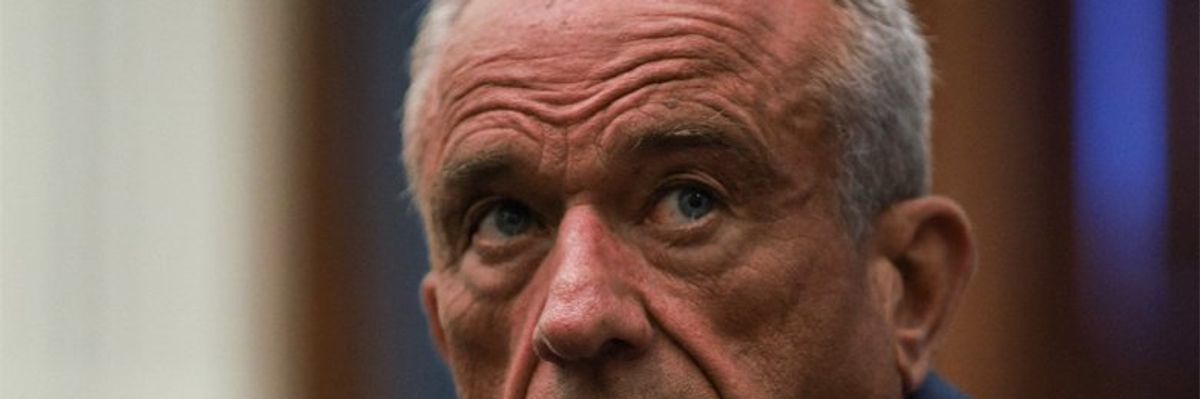
Health and Human Services Secretary Robert F. Kennedy Jr.'s Make America Healthy Again (MAHA) movement is facing criticism for strategic incompetence and playing it safe by concentrating its political resources on Republican primary races already destined for victory while ignoring endangered GOP candidates in crucial battleground contests.
According to a Politico analysis by Amanda Chu, the movement's political organizations—MAHA Action and MAHA Institute—have largely ducked the races that will determine congressional control, despite Kennedy's fervent supporters representing a boost in turnout that endangered Republicans desperately need.
The report singles out Tony Lyons, publisher of Kennedy's books and a lead organizer for the movement's political groups, for having failed to make use of Kennedy's appeal and turn it into the "electoral juggernaut" Republicans had hoped for.
"The majority of those candidates that got that endorsement were going to win anyway," John McCarthy, founder of McCarthy Strategic Solutions, a Republican political strategy firm in Kentucky, told Politico.
The numbers tell the story of missed opportunity. MAHA groups have endorsed just one Republican—freshman Michigan Rep. Tom Barrett—in a competitive House district, while ignoring the rest of the battleground races that will determine chamber control.
In the Senate, where Republicans must defend vulnerable seats in Alaska, Iowa, Maine, North Carolina, Ohio, and Texas, MAHA has backed no one, with no financial support or grassroots mobilization in these critical races.
Of the 20 candidates MAHA endorsed in primary races this spring, most were establishment figures in state races already aligned with MAHA's messaging on vaccine optionality and food regulation. Few received any financial backing from the movement's organizations.
According to Politico, Kennedy's actual impact has been limited to state-level politics. He has traveled extensively to state capitals promoting his agenda, and a Politico analysis found that state lawmakers introduced hundreds of bills with bipartisan support echoing his priorities—some of which have passed.
But the movement's impact on electoral politics remains an open question. State primary races have been dominated by economic concerns, with MAHA-backed candidates who won primaries focusing overwhelmingly on issues that defined the 2024 presidential election rather than Kennedy's signature health and food policy priorities.
More than two-thirds of MAHA-endorsed candidates emphasized affordability and tax cuts on their campaign websites, while nearly half focused on immigration. Less than one-third mentioned vaccine safety or food system policies central to Kennedy and his supporters, Chu elaborated.